 Cura Canem
The little silk dog of Cuba
Havanese
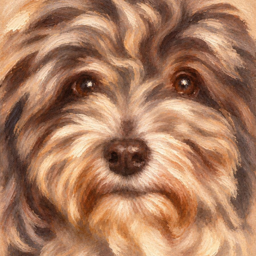
A small but sturdy dog, cheerful and devoted to its people: it asks for company more than space, and for a brush more than miles.
At a glance

History
An exile with a pedigree
According to the FCI, it reached Cuba aboard Italian captains' ships, and in the nineteenth century it settled into Havana's best parlors. It is said it was never sold, only given, which is the polite way of saying not just anyone could have one.
Then came 1959, and a dog whose main credential was sleeping in bourgeois parlors had no great prospects in the new Cuba. In the 1970s Dorothy Goodale rescued it in Colorado, with eleven dogs from exile families. Today it is Cuba's national dog, with much of its family tree written in English.
Temperament: what charms and what to know
- Excellent with kids and sociable with dogs and cats when introduced young.
- Hates being alone: it bonds closely and can develop separation anxiety.
- Likes to bark: it announces everything; early training keeps it in check.
- Feels the cold: it is small and of tropical origin.

The coat: silk that asks for patience
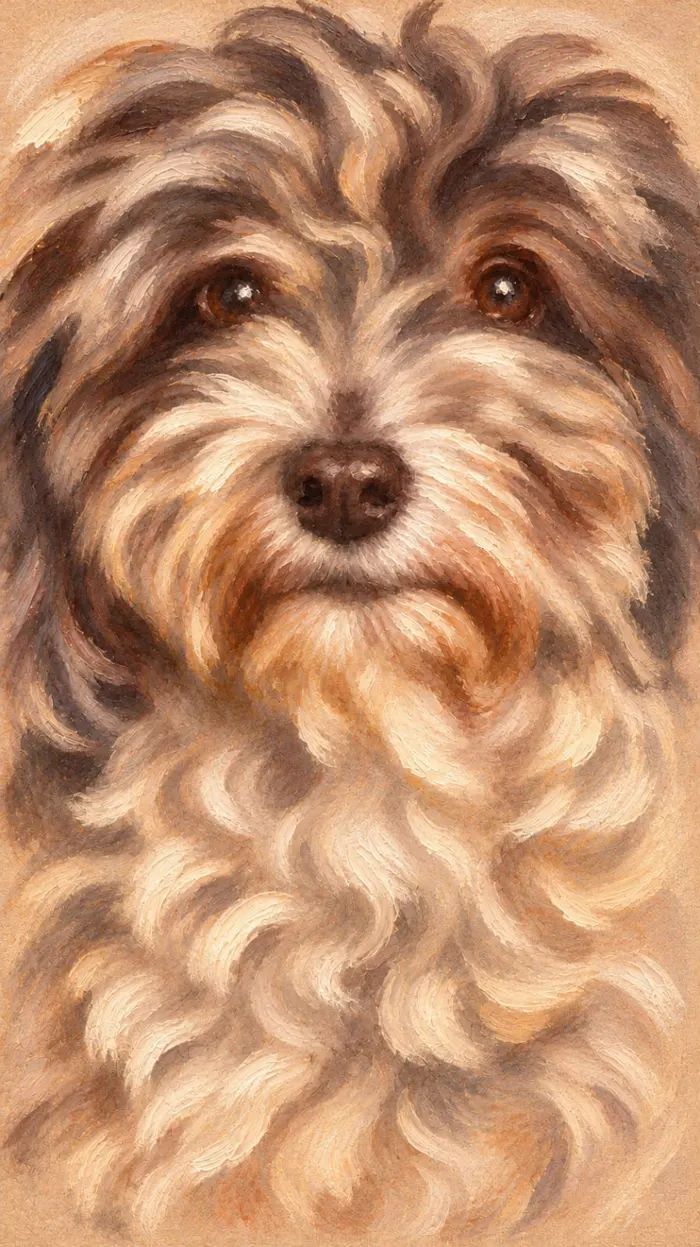
With a long coat, brush layer by layer down to the skin several times a week, and bathe no more than twice a month. A puppy cut saves a lot of work. While the puppy coat changes to the adult coat, daily brushing may be needed.
Health: what both parents should have
A 2024 UK study estimated its life expectancy at 14.5 years. Before you buy, ask that both parents have a yearly eye exam, a BAER hearing test, and hip and patella evaluations; the Havanese Club of America requires these (a CHIC number), and you can verify results at ofa.org.
Myth or fact
Was it born in Havana?
Not exactly. It became Cuban, but its roots are Mediterranean; the name likely comes from the Havana-brown color of many dogs.
Myth or fact
Is there a 'teacup' Havanese?
No. No standard recognizes one, and the FCI disqualifies dogs below its size range. It is usually a pitch for a higher price.
Myth or fact
Is it hypoallergenic?
No dog fully is: allergens are also in saliva and dander. Low shedding may help.

The complete essential guide
22 illustrated pages: history, standard, temperament, coat, health, feeding, training, choosing a breeder, and a record page for your dog. Download an eight-page sample for free.
How much should it eat? Try the dog food calculator.
Frequently asked questions
How long do Havanese live?
Usually 14 to 16 years. A 2024 UK study of 56 dogs estimated an average of 14.5 years.
Do Havanese shed?
Very little, but loose hair gets trapped in the coat and mats if it isn't brushed often.
How big does a Havanese get?
The AKC standard calls for 8.5 to 11.5 inches at the withers; most adults weigh 7 to 13 pounds.
Are Havanese good with kids?
Yes. Breed standards describe a playful, affectionate dog that loves children. Supervise young kids, since it is a small dog.
Can a Havanese be left alone?
Not for long hours. It bonds closely with its family and can develop separation anxiety; teach it to be alone gradually.
What health tests should the parents have?
A yearly eye exam, a BAER hearing test, and hip and patella evaluations. You can verify them in the OFA database.